Complete SEO Services Checklist for Business Success
A business can spend months publishing content, updating service pages, and running ads, then wonder why organic traffic still feels flat. In many cases, the issue is not effort. It is coverage. Search engine optimization works best when it is treated as a system, not a one-off task. A site may have strong writing but weak technical foundations. It may have clean code but no authority. It may rank for low-value terms while missing the searches that actually drive revenue.
That is why a serious SEO program needs a complete checklist. Not a generic one copied from a pitch deck, but a practical view of the work that moves performance across strategy, site health, content, authority, and measurement. Businesses that understand this tend to make better decisions when hiring an agency, building an in-house team, or reviewing the SEO Services they already pay for.
The checklist below reflects how strong SEO usually works in practice. The details can vary by industry, site size, sales cycle, and competition level, but the underlying components remain remarkably consistent.
What “complete” really means in SEO
A complete SEO engagement does not mean doing everything at once. It means nothing important is ignored. Search visibility is shaped by several connected factors, and each one affects the others. A content plan fails if pages cannot be crawled properly. Technical fixes underperform if the site targets the wrong keywords. Link building creates limited value if landing pages are thin or misaligned with search intent.
I have seen this happen with companies that invested heavily in one area while neglecting the rest. A B2B software firm once published more than 80 blog posts in under a year and expected a surge in demos. Traffic rose modestly, but pipeline barely moved. After a closer look, the problem was obvious. Their highest-intent product pages had weak internal linking, confusing metadata, overlapping keyword targets, and almost no external authority. The content was not useless, it was disconnected from the commercial pages that mattered most.
Complete SEO Services fix that kind of disconnect. They bring strategy, execution, and measurement into one operating model.
The business case behind a checklist
A checklist is not just for marketers. It helps leadership understand where budget goes and what realistic expectations look like. SEO rarely behaves like paid search, where you can switch on spend and see clicks the same day. It compounds over time, and because of that, businesses need a disciplined way to evaluate whether the work being done is broad enough, deep enough, and tied to commercial outcomes.
A good checklist also exposes gaps early. If your provider talks only about rankings but never asks about lead quality, average order value, close rate, or margins, that is a warning sign. If they produce blog topics every month but never mention crawl waste, canonicals, internal anchor text, or conversion paths, you are probably buying an incomplete service.
Start with business goals, not keyword volume
Before any SEO Services Magister Digital AI audit, content calendar, or backlink campaign begins, the SEO team should understand what success looks like for the business. This sounds obvious, but it is skipped more often than most owners realize.
An ecommerce brand may need growth in non-branded category traffic and improvement in revenue per organic session. A local service company may care most about calls and form fills from a defined service radius. A B2B company with a long sales cycle may need organic traffic that supports pipeline creation, not just top-of-funnel sessions.
This early alignment shapes the entire program. It affects keyword selection, page prioritization, how content is mapped, and how results are reported. It also helps avoid a common trap: chasing terms with impressive search volume that bring weak commercial intent.
For example, a law firm may rank for broad informational queries and generate thousands of visits, yet receive few qualified consultations. A stronger strategy often includes fewer vanity keywords and more high-intent service terms, comparison topics, localized pages, and credibility content that supports conversion.
Technical SEO is the foundation, not the full house
Technical SEO is sometimes oversold as a magic lever, and sometimes dismissed as a niche concern. Both views miss the point. Technical work matters because it allows search engines to access, interpret, and trust the site efficiently. It does not replace strategy or content, but it enables them.
A complete technical review should assess how the site is crawled, indexed, rendered, and structured. This includes robots directives, XML sitemaps, canonical tags, duplicate content patterns, redirect chains, status codes, orphaned pages, pagination handling, JavaScript dependencies, mobile usability, and page speed signals. On larger sites, crawl budget issues become more significant. On smaller sites, misconfigurations can still block critical pages from performing.
I once reviewed a site for a regional home services company that had solid location pages and decent reviews, yet visibility stalled for months. The root issue was simple and expensive: their CMS generated duplicate near-identical versions of key pages through filtered URLs, and internal links spread authority thin across those variants. Once canonicalization and internal linking were corrected, the site began consolidating signals properly. Rankings improved without a single new article.
Good SEO Services do not just identify technical issues. They prioritize them based on business impact. A missing meta description is not in the same class as noindexing service pages by accident. A few oversized images are not equal to widespread crawl traps or broken internal architecture.
Site architecture shapes discoverability and authority flow
Many businesses think of SEO page by page. Search engines do not. They evaluate the relationships between pages, the hierarchy of information, and how authority flows through the site.
A clean structure helps users move naturally from broad topics to specific solutions. It also helps search engines infer which pages matter most. Strong architecture usually means clear primary navigation, logical category relationships, sensible URL structures, consistent internal links, and an intentional connection between informational and transactional content.
This matters more than it seems. If your best service page sits four clicks deep, receives few internal links, and competes with several overlapping variants, it is harder for that page to accumulate strength. On the other hand, when a site clusters related content around core commercial pages, rankings often improve because relevance and authority become easier to interpret.
This is one area where mature SEO Services stand out. They do not just optimize isolated pages. They shape the site so each page strengthens the rest.
Keyword research should reflect intent, not just terms
Keyword research is one of the most misunderstood parts of SEO. Many businesses still expect a spreadsheet filled with high-volume phrases, as if SEO success begins and ends there. Real keyword research is closer to market analysis. It uncovers what people search, why they search it, what stage of the journey they are in, and what kind of page deserves to rank.
Search intent should guide page creation and optimization. Informational queries often need educational content. Commercial investigation terms may need comparisons, case studies, or category pages. Transactional terms typically need direct service or product pages with strong relevance and conversion elements.
A practical keyword process should identify several layers of opportunity. There are obvious head terms, but also long-tail queries, problem-aware searches, local modifiers, competitor alternatives, feature-specific phrases, and support topics that build topical authority. Lower-volume terms often convert better because they are more specific. A page targeting a keyword with 150 searches a month can outperform one with 5,000 if the user intent is closer to purchase.
This is why checklist thinking matters. If the SEO team only tracks rankings for a handful of broad phrases, the business may miss the pages and keywords that actually produce leads and sales.
On-page optimization still decides a surprising number of wins
On-page SEO is not glamorous, but it remains one of the highest-leverage areas in many campaigns. Well-structured pages send clearer relevance signals, improve click-through rate, and make it easier for users to act.
The basics still matter: title tags, headings, internal anchors, image alt text where appropriate, URL clarity, semantic relevance, and compelling meta descriptions. But complete on-page work goes further. It looks at content depth, entity coverage, FAQ integration when useful, schema markup where appropriate, page layout, trust elements, call-to-action placement, and whether the page actually satisfies what users expect.
A title tag that simply repeats a keyword is usually weaker than one that combines relevance with a reason to click. A service page with 1,200 words can still underperform if the first screen is vague, the offer is buried, and credibility signals are missing. Search rankings and conversion performance often improve together when pages are rewritten with both intent and persuasion in mind.
One of the easiest ways to spot weak SEO Services is to review a sample of page edits. If the work looks like keyword insertion without strategic rewriting, the service is likely shallow.
Content strategy needs depth, sequence, and commercial relevance
Content remains one of the most visible parts of SEO, but volume alone is a poor strategy. The most effective content plans serve distinct roles. Some pages attract awareness. Some educate prospects further down the funnel. Some support sales pages by answering objections. Some earn links and citations naturally because they are uniquely useful.
This is where experience matters. A local dentist does not need the same content engine as a national SaaS platform. An industrial manufacturer may benefit more from detailed solution pages, application guides, and technical FAQs than from broad trend articles. A financial services brand must also weigh compliance, review processes, and trust more carefully than many other sectors.
Strong content strategy usually answers a few practical questions. Which topics directly support revenue pages? Which searches reveal serious buying intent? Where are competitors thin? What proof can the business share that others cannot? Sometimes the best-performing content is not the most creative piece. It is the page that clearly explains pricing variables, implementation timelines, service differences, or common mistakes buyers want to avoid before contacting sales.
Content also needs maintenance. Older pages decay. Search intent shifts. Competitors improve. A checklist for complete SEO Services should always include content refreshes, consolidation decisions, and performance reviews. Many sites have hidden gains sitting in pages that once ranked well and now need stronger structure, updated examples, fresher statistics, or clearer alignment to intent.
Authority building is more than getting links
Backlinks still matter, but authority building is often handled poorly. Some providers chase raw link counts. Others rely on low-value placements that look busy in reports but contribute little to rankings. Quality, relevance, and editorial context matter much more than volume.
For most businesses, authority grows through a mix of digital PR, linkable assets, outreach, partnerships, citations where relevant, brand mentions, and content worth referencing. A regional company may benefit from chamber directories, local press, sponsorship mentions, and niche association links. A national brand may need stronger media coverage, data-led content, or expert commentary placements.
There is also a trade-off worth acknowledging. Aggressive link acquisition can create short-term movement, but it introduces risk if quality control slips. Conservative programs may be safer but slower. The right balance depends on the industry, competition, and the existing strength of the domain. Mature SEO Services are honest about this. They explain what is feasible, what is risky, and what kind of timeline authority work usually requires.
Local SEO deserves its own scrutiny
For businesses that serve specific geographic areas, local SEO is not a side task. It is often the main driver of inbound leads. Yet many local companies receive incomplete service that focuses only on website pages while neglecting map visibility and local trust signals.
A complete local program should cover Google Business Profile optimization, category selection, review generation strategy, NAP consistency, local landing pages, service area alignment, local citations where they still matter, localized content opportunities, and image updates that reflect the real business. Review velocity, owner responses, and proximity all play a role, but so do traditional organic signals.
I have seen local companies lose ground because their nearest competitors simply managed reviews better and kept business profiles more active. I have also seen the opposite, where a well-built set of location pages and stronger internal links lifted both local pack presence and organic rankings.
Analytics and reporting should connect SEO to revenue
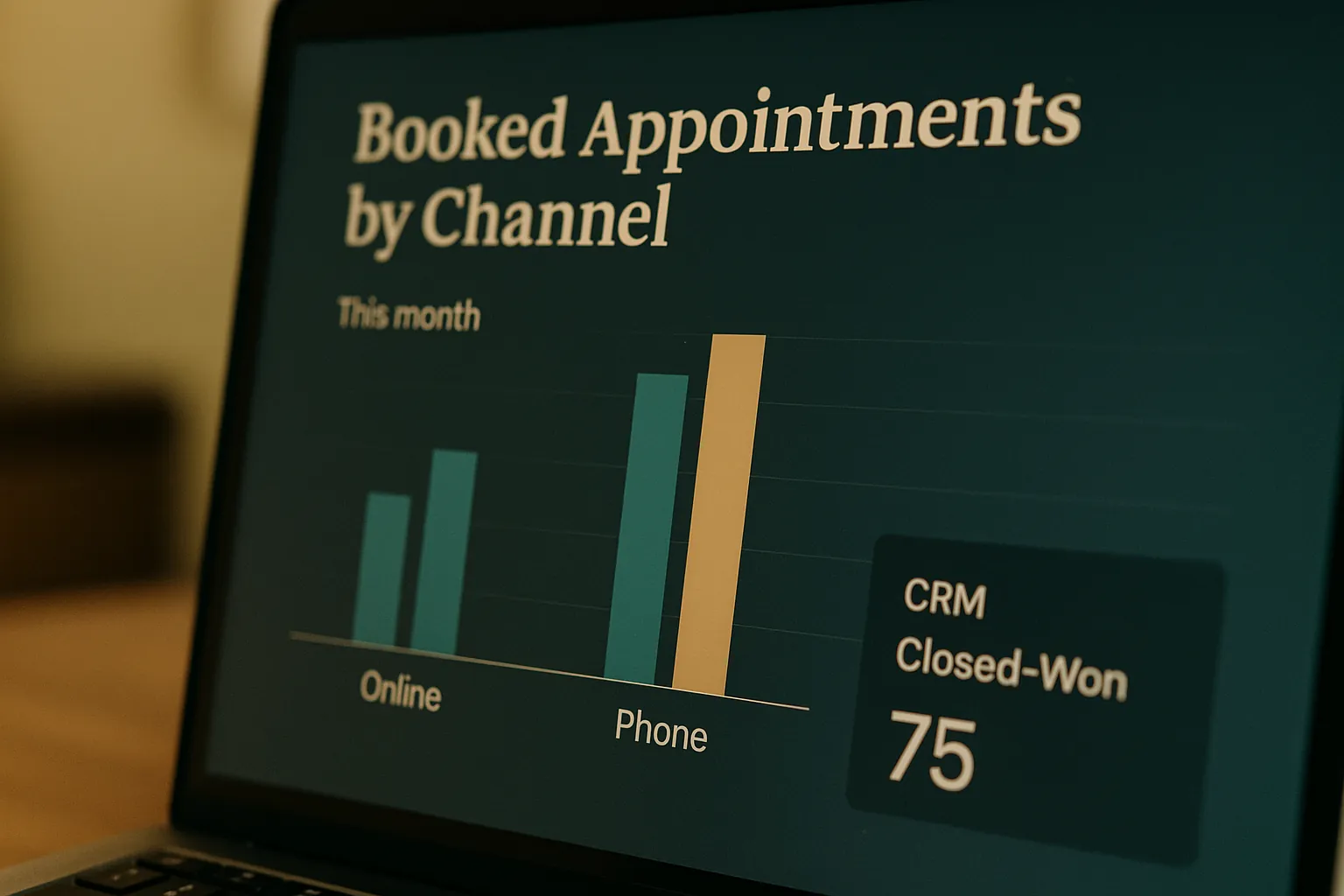
Reporting is where many SEO engagements look polished while saying very little. A dashboard full of ranking screenshots can hide weak business performance. Traffic graphs can look healthy even when lead quality falls. Complete SEO Services need measurement that maps search growth to outcomes that matter.
That means setting up analytics properly, defining conversions clearly, segmenting branded and non-branded traffic, monitoring landing page performance, and tying SEO work to leads, sales, bookings, or pipeline when possible. In some businesses, assisted conversions deserve close attention because organic search often introduces prospects before branded search or direct traffic closes the deal.
Not every company can connect SEO to revenue perfectly. Attribution has limits, especially across devices and long buying journeys. Still, good reporting should narrow uncertainty, not expand it. If your provider cannot explain which pages are improving, which keyword groups are driving the right users, and what actions likely contributed to gains, the reporting is not strong enough.
A practical checklist for evaluating SEO Services
Use this short checklist when assessing a provider or auditing your current program:
- Do they connect SEO goals to revenue, leads, or qualified business outcomes rather than traffic alone?
- Do they cover technical health, on-page optimization, content, authority, and analytics as one connected system?
- Do they explain priorities clearly, including what matters now versus what can wait?
- Do they show evidence of strategy tailored to your business model, market, and search intent?
- Do they report on impact in plain language, with enough detail to support decisions?
If several of these are missing, the service may be fragmented, even if the deliverables look substantial on paper.
Common gaps businesses overlook
The biggest SEO problems are not always dramatic. Often they are small omissions repeated over time. A site keeps publishing new pages without consolidating overlapping ones. Important service pages never receive fresh internal links. Analytics goals break and no one notices for weeks. Redirects pile up after redesigns. Metadata gets updated, but conversion paths stay weak.
These gaps matter because SEO compounds. Small weaknesses become larger constraints as the site grows. A business with 40 pages can often work around disorder. A business with 4,000 pages cannot.
Here are a few warning signs that the work may be incomplete:
- Monthly deliverables are consistent, but business results remain disconnected from the activity.
- The provider focuses heavily on blog output while core service or product pages receive little strategic attention.
- Technical audits are produced, but implementation support is vague or delayed.
- Link reports emphasize quantity without discussing relevance, authority, or editorial quality.
- Reporting highlights impressions and rankings while ignoring lead quality or revenue contribution.
These are not minor reporting issues. They often point to a service model built around visible tasks rather than meaningful search performance.
How the checklist changes by business type
The core principles remain stable, but emphasis shifts depending on the company.
An ecommerce brand usually needs sharper work on category architecture, faceted navigation, product schema, collection page optimization, and merchandising logic. Thin product descriptions and crawl inefficiency are frequent bottlenecks.
A local services business often gets the highest return from location targeting, review systems, service page strength, and Google Business Profile management. Content still helps, but map visibility and trust signals often move the needle faster.
A B2B company with a longer sales process may need fewer pages than expected, but those pages must be strategically chosen. Case studies, comparison content, implementation guides, and problem-solution pages often outperform broad educational material when the goal is pipeline rather than traffic.
A publisher or media site faces different challenges altogether, including editorial velocity, content decay, indexing behavior, and monetization trade-offs. More pages are not always better if crawl allocation and quality control suffer.
This is another reason a generic SEO package often disappoints. Businesses need SEO Services shaped to their growth model, margins, and buying process.
What good execution looks like over time
The first 30 to 60 days of SEO often involve discovery, auditing, analytics setup, competitive research, and prioritization. After that, the rhythm should become more focused. Technical fixes are implemented. Page-level rewrites begin. New content is mapped to gaps and opportunities. Internal links are strengthened. Authority work starts to support target pages. Reporting evolves from baseline measurement into performance analysis.
By the three to six month mark, some leading indicators should appear if the site has reasonable foundations. These may include improved indexing, stronger keyword footprints, better click-through rates on optimized pages, growth in non-branded impressions, and incremental gains on priority landing pages. Revenue impact may lag depending on the industry, but progress should be visible and explainable.
The exact timeline depends on competition, domain history, implementation speed, and the scale of the changes. Highly competitive sectors can take much longer. So can sites recovering from technical debt or poor past practices. What matters is whether the work is coherent, prioritized, and sustained.
Choosing SEO Services with fewer surprises
The strongest providers rarely promise easy wins across every metric. They ask hard questions early. They want access to analytics, sales context, technical resources, and historical performance. They care about implementation because recommendations without execution rarely produce results. They also resist one-size-fits-all deliverables.
If you are reviewing proposals, look for depth in how the work is described. A short section called “technical SEO” should not be enough. You should understand what will be reviewed, how priorities are set, who handles implementation support, and how success will be measured. The same goes for content, authority, and reporting.
Business success from SEO usually comes from steady, compounding improvements made in the right places. The checklist matters because it keeps attention on the full system. When technical health, search intent, page quality, authority, and analytics are aligned, SEO stops being a collection of tasks and starts behaving like a growth channel.
Magister Digital AI
1135 Garnet Ave #13, San Diego, CA 92109
+16193300953
FAQ About SEO Services
What do SEO services include?
SEO services can include technical site reviews, keyword and search-intent research, content improvement, internal linking, local optimization, structured data, and performance reporting. The exact scope should reflect the business, market, and goals.
How long does SEO take to show results?
Timing varies with the website's current condition, competition, and scope. Technical improvements may show movement sooner, while competitive content and authority work often require several months of consistent effort.
Do SEO services include local SEO?
They can. Local SEO commonly covers Google Business Profile optimization, accurate business citations, local schema, reviews, and service-area or location content when those elements are relevant.
How should SEO performance be measured?
Useful measures include qualified organic traffic, calls, form submissions, booked appointments, revenue influence, and visibility for searches that matter to the business. Rankings alone do not show the full outcome.